Saturday, January 18, 2020

Engine of the Night (Part 12)


"Engine of the Night" was the last song that I wrote on this album. It definitely felt like I had ended a chapter.  Late in the Summer before I was destined to head back to Kenyon, I found myself surrendering to the future. I liked to walk into the woods behind my parents house at night, and just sit. It was there that I could sometimes feel a presence- it felt like the whole woods were one spirit at times, or maybe it was the night itself, breathing and pulsating through the woods.

The woods werer the closest thing that I had to a church at that time in my life. It was where I went to escape. Much as I enjoyed the company of other people, I also needed a place where I could feel absolutely safe from the eyes of others; a place where I could never be a fool.  The woods are where I went to transcend reality.

Once, when I was in high-school, Tim Wonderlin took a walk into the woods one night. It started to rain, but we didn't seem to mind. We both saw what looked like glowing rain falling down. It may have been a trick of the light somehow, but in that moment it looked like magic. It was magic. I'm sure I could explain the phenomenon in rational terms, but that's not how magic works. If you rely only on reason, all you're left with is a cold empty shell of reality; a play becomes people pretending on stage, a painting becomes nothing more than colors on a canvas. We often call it the suspension of disbelief, but that's a complicated way of saying, "our willingness to believe."

My friend Branden were out in the woods one night, and the light moved in a magical way.  We wondered if we saw a ghost.  It looked like a luminous figure dancing in the shadows.  We debated that night for years.  Of course, I don't doubt that a rational explanation existed, but we didn't need one.

Another time in high school, I remember walking into the woods with three women. We perched on a rock overlooking the valley. In the distance, we could see the lights of cars driving past. We stood there silent for a long time. Twenty minutes? It was a spontaneous silence, and nobody seemed to feel uncomfortable about it. It seemed perfectly natural, but it was also magical, because it had no explanation. How did it happen? Why then?

Instead of running from the madness, and running away from the stormy feelings, I would go to the woods to let them pass through.  When you fight the madness or a feeling, you are really holding on to the very thing that you are fighting. When I would sit down to write a song, I would always let whatever was in my mind pass through into words on the page. I didn't censor myself. When I wrote a song, I could channel wisdom. It doesn't seem like my wisdom, though.

I wrote this song, and I didn't think much of it.  It wasn't until many years later in Brooklyn, that I was recording every song that I wrote just to have a record that I encountered it again. I was impressed by how it simply said a truth that seemed to elude me at that time.

You might think that this song should close the album, but musical chronology is not linear. It's inside out. All I can say is that it makes more sense if you listen to it more than once. In fact, the more you listen to it, the more it makes sense.

Dewey Kincade: Guitars, piano, vocals
Morgan Brooks: Backing Vocals
Jeff Faith: Upright Bass
Steve Sizemore: Percussion

Thursday, January 16, 2020

Colorado Sunset (Part 11)


So something got broken my Freshman year. I came home from college feeling shell-shocked. I had a band, Satori, and we practiced and tried to gig. We played several shows in a barn. I think we played a show in a commercial venue as well, but the venue escapes me. I don't think it's just old age. I remember bringing the gear back to our practice space in my parents mini-van, and their was a light rain, and as I left my guitarist's neighborhood, I skidded out into a major road, and got hit by another car. 

Everyone was all-right, but I remember doing a complete 360 in my car. There was a dent in the body, but both cars were driveable. The officer showed up, and she took a report, and we all parted ways. Then things began to get weird. 

The next day I was lying in my old bedroom. My aunt, uncle and cousin were visiting, so I had to sleep in my smaller bedroom. The next day, reality seemed to be slipping away. When I found myself in a state that was near-sleep, the walls and everything would start to feel like they were drifting apart. I had never hallucinated before (or since), but it was a very disconcerting feeling. It went away when I got out of bed and began having my every day experiences. Something about the mundane reconnected me to reality, but again the next night I began to feel the sensation of my slipping out of tangible reality. 

I never told anyone about this at the time. I guess I thought people might think I was crazy. In hindsight, it might have been the result of the accident the night before. I was physically fine, but maybe something happened. 

That summer, I would often jolt myself awake, because I could feel myself slipping on many nights. It often happened, when I went to bed, and I wasn't exhausted. This song is about that experience.  The song sounds impressionistic and abstract, but I was experiencing abstract and impressionistic moments, and it scared me. 

The other part was Colorado. I went to my cousin's wedding in Colorado, and I had gotten terribly sun-burned on my legs. It hurt to walk. My brother, sister and father climbed Pike's Peak, but I couldn't go. They questioned whether I was that burned, and thought I might be lazy. At any rate, one night I woke up in my Great Uncle's house. I had found myself drifting again, and I awoke with a start. My heart was racing, and then I had this moment of terror. It was not just because of this drifting sensation, but I feel very isolated and alone. It was an unbearable feeling. I wanted to sob, but I also didn't want to wake anybody up, because I didn't want to explain myself, because I couldn't. 

Whenever I think of the dark night of the soul, I think of that night. It wasn't until I had gotten back to Louisville that I wrote this song. The worst seemed to be over, but that wasn't entirely clear. That's why the song ends on such an uncertain note. 

Dewey Kincade: Guitars, Vocals
Jeffrey Faith: Upright Bass
Steve Sizemore: Percussion

21 poems (Part 10)


In a perfect world, the album would have a booklet, and this booklet would be filled with poems. The last two parts of the story only make sense, if you read the poetic interlude. One night I wrote these 21 poems (below). And what a night it was. It was a Saturday. Kenyon has what's called Summer Send-Off, where a bunch of bands play.  Some friends and I went to watch the music, but we left to go make our own. We spent hours in an attic room in the KC improvising, and it was a very therapeutic experience.

But as cathartic as it was, I didn't get it all out. We went to a dorm-room, and there were people there, but I couldn't sit still, and I left without saying goodbye, which I did quite a lot. There was a woman there that I wanted to talk to, but I couldn't. I had spoken to her the night before, and it seemed like we were inching towards something, but I couldn't be in that moment.

Instead, I found myself writing a heartfelt love letter, which was the best that I could do. I dropped the letter off, and felt like I had done as best as I could. But then came the waiting, and that night, I couldn't wait. Instead, I wrote in my little blue book. Poem after poem. And when I was all done, I realized that I had still more to say, but not in my book. I went to her room, finally having the courage to say to her face to face what I had written in my letter, but I found that she was with someone else.

I quietly tip-toed away feeling deeply embarrassed. I was so embarrassed that I avoided everyone I knew that last week. I ate lunch at a different dining hall. For a week, I went to great lengths to avoid everyone. One person came looking for me. She was not the one that I had been looking for, but it didn't matter. I didn't feel so bad. For a while I felt okay. For a while we were both victims of the moon, and we both understood each other on that level. 


I.

I’ve been paying for the
same crime my whole life
I can’t lie to the people
I love.
I just beat them senseless
with cruel honesty
Watching helplessly as they
approach death.

A fool to care.


II.

She’s beautiful
And captivating
And again that futile desire.

Because to love her
    I must destroy everything
    she holds dear.

I must tear at her flesh,
    and mine as well,
    (but what does it matter?)


III.

What shall we say children?
  It’s all laughter anyway,
  But there have been no victors,
  Then what shall we say?
  To each other?
  Shall we say anything to each other?
No let us hide and hide and hide
    Who knows this struggle?
Who has mastered hiding?
    I have!
Who has mastered this struggle?
    I have!
Who has watched as millions suffer
-all for a word they
can’t pronounce?
A gesture shan’t come,
A touch that isn’t made,
What shall we say?
When the moment
arises
and we pass each other
knowing full well that guilt
that we have mastered
what shall we say?

Nothing.

            IV.

I laughed at him,
    he was trying to talk to her,
    but he wanted more,
    he tried and tried
    but he never said it

I laughed at him,
    the folly of his struggle
    when there is no struggle
    only fear
    and he was locked by that

What does he say?
    I can’t hear anything distinguishable
    Because he can’t pronounce anything
   but that one word, and when
  he speaks all you hear is that
 fumbling attempt
I laughed at him
       so full of futile strength
I cried because it was me.


            V.

Look children,
    See your own hands?
    So free with the blade?
    See the slaughter
    Hear the cries.

We are as brutal as we need to be
We are not swayed but the
    desperate gasps
    last attempts at life
    now too late

We overcame them
We were so precise with the blade
My children
     But I am your child as well
Laying waste at every moment
    when does the killing end?
    when?
   Why must we needlessly kill
            ourselves
  Every second we execute
            so mercilessly
                the victim and the executioner
                        become one
                        the chain is never
                                                broken

VI.

Ah, now
Is this the story?
Then the boundaries are broken,
Tragedy?
Comedy?
Romance?
We see that it is all one and the same

            VII.

How is it now that every sound frightens me
Will I be so easily won?
This is mere child’s prattle
No thought connects
 and we shudder at each
  explosion
 no matter that it’s felt
  we shake
   with each click
    death
     death
      death
      that’s all we know


VIII.

We sat their freezing
Just letting ourselves die
As the icy wind ripped and tore
We acted as if we were having fun
Laughing so hard
We all wanted to say something
And every now and then two of
us would make eye contact and
know exactly what was wanted
We want to overcome this burden
but we freeze
surrounded by other freezing people
And we can’t seem to reach out


IX.

It breaks down to nothing but
abstractions
We deal with “its” and “we” and “deal”
but nothing else can do better
because the constantly-moving
spirit warns us that there
was no return from the brink

but who’s voice is that?


Yes! It’s all felt,

I must recover


            X.

I sit so calmly on the edge of my
            sanity
Is it the calm before the storm?
Is it the calm after the storm?
Is this the storm?
Ah, such questions are needless
Though I must be careful not
to get too comfortable
Else I should fall asleep.


            XI.

I will repair myself
And prepare myself
A shower and a shave
            will do
I feel whole-clean
            never mind the extremes
I am ready
            Perhaps today the battle is won
            Perhaps not
            Regardless, I am ready.


            XII.

I will meet you in the morning
   Sweet early morning
When life awakens
    Yet all else remain asleep
    Save for two
We shall great each other
We who have struggled all night
    with the question
We will look clean
    and eager
    We will be invincible
and there will be no words
for the victory is in our eyes
And in the morning
Sweet early morning.


            XIII.

Women,
            Ye have taught me
            More than could be understood
            In one life-time
            Volumes

Ye have taught me
            With your eyes
            Full of the possibilities
            The cross-roads are your eyes
            And the eagerness
           
Your thighs
            Full of energy
                        and excitement
           
            Your vagina
            rich with the milk
            And I shall embrace that milk
            And I shall embrace
                        all that is you
           
            Share it.

            XIV.

The Ghost
The more I suffer,
The more invisible I become.
I shouldn’t be surprised.
I have known many ghosts,
But now I am the ghost-
Invisible to all
Moaning with utter despair
Refusing to let go
  And know that universality
    The all-too-big universe
    That imprisons me,
    or my knowledge of it.
  My chains are so loud
 But only I can hear them
 The world is deaf
  For I am memory.


            XV.

The eversoul,
    Trying to break free
    The ties of consciousness
    Trying to strip away
    At knowledge
    And find it
    Itself
    The time will come
    to relax
    And float down
    the waterfall.


XVI.

Darkness,
    I hear the snores in the distance
    all are asleep
    at this, the hour of transitions
    I will wonder:
    Did I break the chain?
    Did I rise above?
    Did I tear away?
    Does it matter?
    We will know
    Soon the sun will rise
    And we will know
    Come, Sun,
    I welcome thee.


            XVII.

All this:
    it hurts to even think
    but soon the mind will drown
    and unity will prevail


            XVIII.

Even if it’s to be alone
 The journey has made us
  Stronger.
   We need not fear;
     We need not mourn
            for ourselves
      We shall all be
kings and queens
        And love will know
        As it has in the
            beginning.

            Come, say it with me:
                        love.


            XIX.

Where shall I end this?
  Will all things be made known?
  Will we find “it”?
  Will we tear down the walls?
  Or is that part of the story?

Need we fear this-
  A faint glimmer
  of something impossible
Always in her eyes,
Always in her eyes.

Joy has been made
    known.
Need there be an end?


            XX.

Finally,
  As we hoped,
  No more struggle,
  No more mirrors,
  No more glass,
  No more sculptures of ourselves,
  No more crucifixes of ourselves,
  No more misplaced desires
  No more sand-castle shadows lying in your bed
  No more hungry eyes
  No more desperation
  No more fear.

Just an exhaustion
  A peace so pure
  Sweet exhaustion
  Let go to the sweet peace.
            Yes, let go.


XXI.

I will not fight you
Because whoever wins, loses
The victor & loser
No, we must transcend
            this struggle
            this voice
            this road
            Go beyond.
            We shall.


            The time
                     has come
                     no more words.

Friday, January 10, 2020

Everything's Fine (Part nine)


I wrote "Everything's Fine" towards the end of my freshman year. There were a couple of weeks left, and while the song has a dark under-current to it, it has a lot of energy to it. The song is an overview of the suburban family.  Despite the title, everything is not fine. Mom, Dad and the children are struggling with deep issues. 

The family in question isn't the one that has to deal with real tragedy.  The horror, and the tragedy are much more banal. Little by little, the characters trade away their integrity for security, and wind up with neither. It might seem odd to write a song being so far removed from that world at college, but college is the finishing school for the suburban life. For some, at least. 

This song is somewhat auto-biographical, but I wasn't the only one living in such a house. Most of the people I knew lived in these houses where the depths of being human was hidden by a facade.  I wasn't trying to slam middle-class America. In my experience, they were going through a very real hell. The mother, the father, and the children are all struggling with a system that asks them to be inauthentic. The state of "fine" is not a state of joy, or triumph, but a state of having achieved what was expected. 

Dewey Kincade: Guitars, keys, harmonica, lead vocals
Tonya Buckler: Backing vocals
Jeff Faith: Bass
Steve Sizemore: percussion

What do I have? (Part Eight)


"What do I have?" is a song I wrote after a buzz of activity. Scott Wilcox and I had said that we were going to write a play over Spring break. We came back, but we neither of us had written anything. So, we wrote a play the following week. We had everything mapped out, so we didn't start from scratch. We had a performance scheduled for late April, I think. I think we cast and produced the whole play within a month.

We put together a great group of people: Liz Leigh, Jon Adams, Dave Bee, Laura Copeland, and John Malmud. I think the play turned out well. The scene's that Scott wrote worked really well, and I was pleased with the monologues that I wrote, but the other parts I wrote weren't as good. Still, there was always something about the story that kept pulling me back over the years.

Play productions are emotional experiences, and when you're done with such a whirlwind experience, you are often left feeling depleted.  I wrote this the day after the production ended. You can hear the depletion in the song.

At any rate, the song is a brutally honest look at myself.  I wanted to feel triumphant, but I only felt ridiculous. I have never played this song live, and I have never even played for anyone else in private. I may have outgrown this self-portrait, but even to this day there are lines that ring true. And yet...

Despite the inward brutality, there appears a glimmer of hope at the end.

The gates have been opened
And there's no good or bad
I try not to think on
What did I have
What do I have

Thursday, January 9, 2020

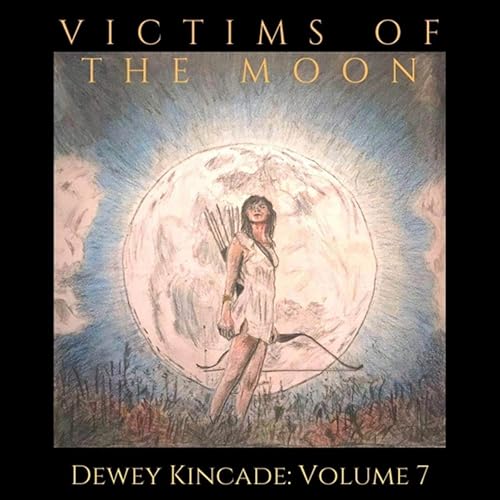
Victims of the Moon (Part 7)


"Victims of the Moon" is a long song. I remember sitting over my desk, and verse after verse kept coming. The song is about a moment that had happened several years before. I had gone Northeast to visit colleges. At least, that was the cover.  The truth was that I was going to visit a girlfriend, of sorts. We had met in Greece the summer before my junior year. It was a period of sensory overload. So much new information was flooding in, and every day was imbued with infinite possibility. It was the perfect setting for romance. 

Falling in love at 17 is easy. The challenge was sustaining the affair, and when she lived in Connecticutt, and I lived in Kentucky that was damn near impossible. She had a boyfriend, which probably makes things more complicated. At any rate, I was set to visit her one weekend over the course of my trip.  It was an awkward day at first, but then the following night, I was dropped off while she and her friends got ready for a party. 

I was hanging out in the woods, and I was playing music, and apparently I was supposed to be picked up, and they mentioned that they had come by, but I didn't hear them. A while passed, and I made my way out of the woods to the house where the party was. My girlfriend was drunk, which wasn't something that I did. Her boyfriend showed up. A weird conversation ensued. 

I ended up hitching a ride to her house with some guy I just met at the party. Me and this new guy just chatted in the kitchen for a while. Her brother ended up picking her up and bringing her home. The next day, I got on a plane to go home. 

A few months later, she flew down to Louisville to visit me. We had some fun, but we simply weren't at an age, where we could act on our feelings, and it wasn't clear to me in retrospect how deep her feelings really were. 

Well, there I was nearly a year later, and my heart seemed to have a hard time letting go. I don't know what I did wrong, but I felt guilty, and that came out in the song. The funny thing is, that after I wrote the song, I felt a kind of catharsis. Whatever had kept me tethered had become untethered. I was emotionally free. 

I think that if you're willing to invest in this song, and the words ring true, you might have a similar experience. 

Wednesday, January 8, 2020

The Morning Song (Part 6)

You can read me ramble on, or you can listen to the song here (or here, I'm not picky).

At any rate, this was the first song I wrote my second semester. My room-mate, Anthony, did not make it back. He had gotten kicked out, and I honestly don't recall the specifics, but he did leave the words "Fuck middle America" scrawled across the room. It had made a nice backdrop for a while. I got along with Anthony (we had much more in common than my previous room-mate), but I also enjoyed the solitude. I had merged the two beds into one, and I had a king sized bed for the rest of the school year.

I listened a lot to a mix-tape that Andy Kotowicz had kindly made me. He was a bit of a music maven, and the first time I'd heard Fugazi's Steady Diet of Nothing, and Nirvana's Nevermind was in his room. The second semester had started off much better. Scott Wilcox and I had started cooking up an idea for a play, which we later put on that semester.

On one night in winter, but on a spring-like day, I sat down and wrote this song. The song is about the thaw. The song is about how warmth can return to even the darkest places.

At any rate, the song... I almost never rewrite a song. Or if I do, I rewrite it completely. It's not that I have some problem with putting in the extra effort. I've done multiple drafts of plays that I've written, and a song is only five minutes long. I think the reason that I do so little rewriting (lyrically speaking) is that a song should always feel like a continuous thread. The first dozen or so songs I wrote were laborious affairs, and half of them weren't any good, and the good ones seemed to write themselves.

About the only thing I did to this song was take out a compulsory bridge, which it didn't need. I also changed the age of the girl from seventeen to twenty-three.  The song is not supposed to be taken literally, but I imagine people will do it anyway. Nor is the relationship in the song sexual. Also, the song leaves a lot to the imagination. What happens to the man in the end?  You might think you know, but there are other possibilities, I'm sure.

If there were a single to this album, this would be it. I've tried to record it several times, and even the Navigators played it, I think. I remember rehearsing it in Empire studios, but it may have never left lab.

Dewey Kincade: Guitars, harmonica, piano
Tonya Buckler: Backing vocals
Jeff Faith: Upright Bass
Steve Sizemore: Percussion

Saturday, January 4, 2020

You Are The Only One I Need (Part 5)


If you want to understand this song, you can just listen to it. 

"Just a Spark" ends act one, and "You Are the Only One I Need" is a bit like the intermission.  It's an unusual song to start the album with for that reason, but it makes sense on another level. I had written the first four songs within a month of my being at Kenyon, and then the writing for this album paused. I was still doing plenty of writing. I was working with Jon Adams, Dan Levine and Dave Le Compte doing Gear's Apostle music, which in turn inspired an album of Satori songs that I wrote that first semester. 

The album took a pause, because I went from being inside my head, to outside in the world.  There was so much to experience that first semester. I was in Macbeth, which ended up being a very mediocre production, and one that many of us involved with knew was not going to work. I remember being asked to grow out my beard, which wasn't really possible at that point in time, so I just looked scraggly. 

The play almost made me miss meeting Allen Ginsberg. We had to rehearse the night he performed, and I was very disappointed, but it turns out he was giving a short reading the next day, and I showed up for that. Afterward, I invited myself to lunch with him. It's a bit strange meeting someone who had such an enormous impact on the world in which you live.  In hindsight, the most interesting thing he said was that Americans don't know how to grieve. It's interesting how much that idea applied to that moment in my life. 

See, I was mourning the loss of something. A sense of self? But I was unable to grieve about it, and therefore unable to let go. But then, the dark clouds seemed to lift for a while. 

 After that first semester, I went home, and I had the chance to reconnect with friends. One night I was expecting my friends Dan and Hewett to come by, and we were going to go somewhere.  At some point between dinner and they're arrival, I wrote this song. That might explain why its so short. I think I thought that I was going to finish it later, but when I came back to it, it seemed finished. 

The first time you might hear it, you might think that this song is about romantic love. In fact, I might have had that idea lodged in my head at some point, but now I can tell that this song is a hymn to the divine feminine. 

Now I had been raised Episcopalian, and God was always a man in that story. One might think that any divine being would be devoid of gender, but it was very hard to erase the idea of God the father. But there was no mother in that story. I mean, Mary is the mother, but she is not divine. She is very much human. 

Over the years, I have developed an intuitive sense of the Goddess.  She is very different from God the father. She is capable of ruthless vengeance, and warm-hearted compassion. Songs like "Guardian Angel" and "Broken Rules" capture both sides of her personality.  The Moon Goddess is one of her incarnations, and the moon is a perfect symbol for her, because she changes- or so it seems. 

Now the sun is the father, and there is much to be grateful for when it comes to the sun, but the sun is distant, and the moon is right here. We might not see it, but we feel it all the time. The sun hits us in our mind, but the moon hits us in our heart.  

Now the mother, like all mothers, sometimes drags you places that you don't want to go. These darker places sometimes result in deep suffering, but your mother is only doing it for your own good. Your heart needs to go through those dark places to evolve. 

It's interesting, because one of that themes that year was romantic disconnect. If you are a straight man attuned to the goddess, it can't play havoc with your love-life sometimes. Women aren't just women sometimes, because they become reflections of the goddess, and thus every woman becomes all women, and that doesn't work. I can't imagine having to be god for someone else- I'm too human. I've since come to see that women (like men) do have a divine spark in them, but they also have a heavy dose of earth as well.

I find it interesting that I wrote this song at the darkest time of the year near the winter solstice. I remember this, because I remember Dan and Hewett coming to take me to Trina Fischer's winter solstice party.  It's interesting how many holidays from that time of year (Christmas, Hannukah) all have a theme of light. We should be joyful because even in our darkest times, there's light.

This song represents a moment of gratitude, and I thought it a fitting opener to the album, because it seems like there's so much darkness throughout.  You need this song for context.  The darkness isn't their to create unnecessary suffering, but to promote growth. Of course I wrote this over my winter break. It was the darkest time of the year, but with a little reflection, I was able to see the joy. 

I think the Goddess was giving me strength for what was about to come.

Dewey Kincade: Vocals, Keys, Guitars, mandolin
Tonya Buckler: Backing Vocals
Jeff Faith: Upright Bass

Just a Spark (Part Four)

Dewey Kincade, Vol. 7: Victims of the Moon

"Just a Spark" was a bit of hope after "Easy Way Out."  I'm sure it had a lot to do with the crush that inspired the song. There really was a leather queen, and a hngry wolf-pack following her around.  I could relate all the details, but I prefer the version in the song. All you need to know is that my first semester was colored by this crush. 

People seemed to like this song. I played it at coffee-houses, and this would often be the closer to my set. It's epic. I recorded it twice once for Lost and Found, and once for this album, and yet it's a strange song to merit such attention. 

For one thing, it's a long song.  Both recordings are over 7 minutes, but if you listen, you won't feel like it's a long song. On the one hand, not a lot happens in the song. It's like a portrait of a moment in time, but on the other hand the details are very revealing. 

It's funny, because despite having written so many songs, at this point in my life, I didn't spend a lot of time thinking about what made them work.  I would just write them, and they either worked for me, or they didn't, but when I analyze this song now, I see that there are some unusual aspects to it. For one thing, the entire song is based on triplets instead of couplets. The rhyme scheme looks like this:

AAAB, CCCB, DDDB, EEE

Each triplet is tagged with part of another triplet. Robin Gager pointed this out to me, and this unusual structure wasn't something I had planned, so much as discovered. 

I played the song a lot my sophomore year. I played it as filler for Roundtable's second show my sophomore year. Despite being filler, Bert Tunnel had nice things to say about the song in his review for the Collegian. I found this ironic, because one of my first positive reviews as a songwriter, was for a play production. 

Of course, the unintended consequences of unconscious creation are very real. My room-mate Spencer pointed out that wolves don't bark, which I didn't know, or didn't really think about it, but maybe the wolves were dogs all along. 

For about a year of so, the song was an indelible part of my life, so many years later, after I recovered from cancer, and I had the chance to record Lost and Found, this song was on the list of favorite songs that had never seen the light of day. I'm quite happy with that recording, but this version fits better with the other songs on this album. They're all part of the same story. 

In fact, there was a moment when I considered making the leather queen herself the cover of the album.  The story itself seems central to the story of the album. I think this was the moment that I realized that I had the beginnings of an album, but I took break from it. In the next month or so, a whole lot happened.

UPDATE:

The phrase, "Just a spark," took on a life of its own after I wrote the song. I began to see the world populated by people with and without the spark. I never defined what having the spark meant in my mind, but I knew it when I saw it. Now, I might define it as someone who is both inside and outside the world. They have a burning desire to be in the world, and by fully being in the world, they must also be outside the world, because to be wholly in the world, we run the risk of being crushed by it. I'm sure that clears everything up.

The people that I seemed to fall in with tended to sparkle. I remember my friend Dave Bee nursing some heart-ache over a gal, and he asked me about her new boyfriend, and all I could say was that he didn't have the spark, and Dave seemed to know what that meant, since he had did. We were sitting on the back patio of Gund, and as we had finished our discussion, the gal walks by, and Dave stands up and without saying anything puts his hands up in a big gesture of a shrug so she could see.  I don't think he could have said anything as clearly as that moment. 

My friend Dave Le Compte pointed out that although it may have felt like I was going through this weird phase of being in and out of time, I was not alone.  Many of us were in that same moment of awkwardkness.  As I begin to look back, I see that many of the people that I spent time with, were going through similar torments. A whole lot of people didn't make it back to Kenyon the next year- many of them were from my dorm (Nick, Anthony and Chris). 

In astrology the moon reflects our emotions. It is our interior light, as opposed to the exterior light of the sun. I think of Shakespeare's phrase "star-crossed lovers" and it makes me think that we were all star-crossed lovers of some sort at that point in time. Somehow our stars were not in allignment. We were waging wars on private burdens, but we were all similarly afflicted, and we had no idea. For those that find the astrological reference a bit too much, you can simply see the stars as universal forces over which we have no control that appear to be working in the background. 

You could argue that I'm stuck in the past, but songs give me a magical ability to plug into a moment in time and re-enter my own headspace. It's like a living document to me. I often have a songwriter's sense of chronology. See, most narratives are linear, but songs are cyclical- they keep coming back to that some moment, the chorus.  So when I inhabit a song again, I am transported back to that moment. 

If a song is a moment, than an album is the whole story, and while "Just a Spark" feels central to the story of the album, it never needed to be placed in some prominent part of the album- whatever that means. I've tried putting songs in chronolical order, and it almost works. But songs reflect each other in unusual ways. Some songs cast long shadows over songs that come later, and others reflect ones that came before them.

I think Dylan put it best when he described the songs from Blood on the Tracks as if they were paintings. When you step outside, you can see the whole painting, but from the inside you notice the details.  Unlike a painting, songs have time. The chronos has logic, even if it isn't linear. It's a bit like a watercolor where there are many layers.  You don't seem them all at first.  A good album is like that. Each listen opens up a new layer.  When you first listen, the songs are completely new, but really every listen yields something new. 

I am not stuck in the past so much as unstuck from the present. I inhabit a lot of moments in time, because to have the spark you are both inside and outside time. 

Dewey Kincade: Vocals, keys, guitars, harmonicas
Jeff Faith: Upright Bass
Steve Sizemore: Percussion