Friday, January 10, 2020

What do I have? (Part Eight)


"What do I have?" is a song I wrote after a buzz of activity. Scott Wilcox and I had said that we were going to write a play over Spring break. We came back, but we neither of us had written anything. So, we wrote a play the following week. We had everything mapped out, so we didn't start from scratch. We had a performance scheduled for late April, I think. I think we cast and produced the whole play within a month.

We put together a great group of people: Liz Leigh, Jon Adams, Dave Bee, Laura Copeland, and John Malmud. I think the play turned out well. The scene's that Scott wrote worked really well, and I was pleased with the monologues that I wrote, but the other parts I wrote weren't as good. Still, there was always something about the story that kept pulling me back over the years.

Play productions are emotional experiences, and when you're done with such a whirlwind experience, you are often left feeling depleted.  I wrote this the day after the production ended. You can hear the depletion in the song.

At any rate, the song is a brutally honest look at myself.  I wanted to feel triumphant, but I only felt ridiculous. I have never played this song live, and I have never even played for anyone else in private. I may have outgrown this self-portrait, but even to this day there are lines that ring true. And yet...

Despite the inward brutality, there appears a glimmer of hope at the end.

The gates have been opened
And there's no good or bad
I try not to think on
What did I have
What do I have

Thursday, January 9, 2020

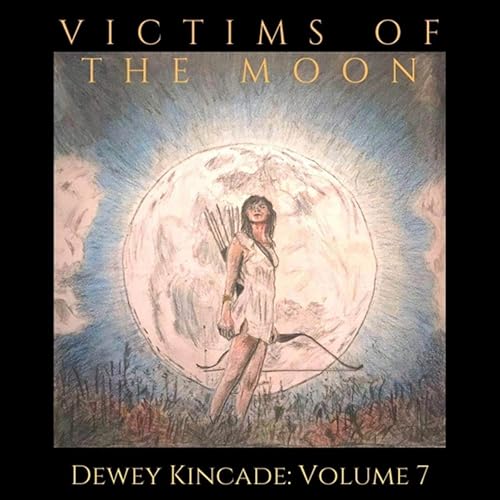
Victims of the Moon (Part 7)


"Victims of the Moon" is a long song. I remember sitting over my desk, and verse after verse kept coming. The song is about a moment that had happened several years before. I had gone Northeast to visit colleges. At least, that was the cover.  The truth was that I was going to visit a girlfriend, of sorts. We had met in Greece the summer before my junior year. It was a period of sensory overload. So much new information was flooding in, and every day was imbued with infinite possibility. It was the perfect setting for romance. 

Falling in love at 17 is easy. The challenge was sustaining the affair, and when she lived in Connecticutt, and I lived in Kentucky that was damn near impossible. She had a boyfriend, which probably makes things more complicated. At any rate, I was set to visit her one weekend over the course of my trip.  It was an awkward day at first, but then the following night, I was dropped off while she and her friends got ready for a party. 

I was hanging out in the woods, and I was playing music, and apparently I was supposed to be picked up, and they mentioned that they had come by, but I didn't hear them. A while passed, and I made my way out of the woods to the house where the party was. My girlfriend was drunk, which wasn't something that I did. Her boyfriend showed up. A weird conversation ensued. 

I ended up hitching a ride to her house with some guy I just met at the party. Me and this new guy just chatted in the kitchen for a while. Her brother ended up picking her up and bringing her home. The next day, I got on a plane to go home. 

A few months later, she flew down to Louisville to visit me. We had some fun, but we simply weren't at an age, where we could act on our feelings, and it wasn't clear to me in retrospect how deep her feelings really were. 

Well, there I was nearly a year later, and my heart seemed to have a hard time letting go. I don't know what I did wrong, but I felt guilty, and that came out in the song. The funny thing is, that after I wrote the song, I felt a kind of catharsis. Whatever had kept me tethered had become untethered. I was emotionally free. 

I think that if you're willing to invest in this song, and the words ring true, you might have a similar experience. 

Wednesday, January 8, 2020

The Morning Song (Part 6)

You can read me ramble on, or you can listen to the song here (or here, I'm not picky).

At any rate, this was the first song I wrote my second semester. My room-mate, Anthony, did not make it back. He had gotten kicked out, and I honestly don't recall the specifics, but he did leave the words "Fuck middle America" scrawled across the room. It had made a nice backdrop for a while. I got along with Anthony (we had much more in common than my previous room-mate), but I also enjoyed the solitude. I had merged the two beds into one, and I had a king sized bed for the rest of the school year.

I listened a lot to a mix-tape that Andy Kotowicz had kindly made me. He was a bit of a music maven, and the first time I'd heard Fugazi's Steady Diet of Nothing, and Nirvana's Nevermind was in his room. The second semester had started off much better. Scott Wilcox and I had started cooking up an idea for a play, which we later put on that semester.

On one night in winter, but on a spring-like day, I sat down and wrote this song. The song is about the thaw. The song is about how warmth can return to even the darkest places.

At any rate, the song... I almost never rewrite a song. Or if I do, I rewrite it completely. It's not that I have some problem with putting in the extra effort. I've done multiple drafts of plays that I've written, and a song is only five minutes long. I think the reason that I do so little rewriting (lyrically speaking) is that a song should always feel like a continuous thread. The first dozen or so songs I wrote were laborious affairs, and half of them weren't any good, and the good ones seemed to write themselves.

About the only thing I did to this song was take out a compulsory bridge, which it didn't need. I also changed the age of the girl from seventeen to twenty-three.  The song is not supposed to be taken literally, but I imagine people will do it anyway. Nor is the relationship in the song sexual. Also, the song leaves a lot to the imagination. What happens to the man in the end?  You might think you know, but there are other possibilities, I'm sure.

If there were a single to this album, this would be it. I've tried to record it several times, and even the Navigators played it, I think. I remember rehearsing it in Empire studios, but it may have never left lab.

Dewey Kincade: Guitars, harmonica, piano
Tonya Buckler: Backing vocals
Jeff Faith: Upright Bass
Steve Sizemore: Percussion

Saturday, January 4, 2020

You Are The Only One I Need (Part 5)


If you want to understand this song, you can just listen to it. 

"Just a Spark" ends act one, and "You Are the Only One I Need" is a bit like the intermission.  It's an unusual song to start the album with for that reason, but it makes sense on another level. I had written the first four songs within a month of my being at Kenyon, and then the writing for this album paused. I was still doing plenty of writing. I was working with Jon Adams, Dan Levine and Dave Le Compte doing Gear's Apostle music, which in turn inspired an album of Satori songs that I wrote that first semester. 

The album took a pause, because I went from being inside my head, to outside in the world.  There was so much to experience that first semester. I was in Macbeth, which ended up being a very mediocre production, and one that many of us involved with knew was not going to work. I remember being asked to grow out my beard, which wasn't really possible at that point in time, so I just looked scraggly. 

The play almost made me miss meeting Allen Ginsberg. We had to rehearse the night he performed, and I was very disappointed, but it turns out he was giving a short reading the next day, and I showed up for that. Afterward, I invited myself to lunch with him. It's a bit strange meeting someone who had such an enormous impact on the world in which you live.  In hindsight, the most interesting thing he said was that Americans don't know how to grieve. It's interesting how much that idea applied to that moment in my life. 

See, I was mourning the loss of something. A sense of self? But I was unable to grieve about it, and therefore unable to let go. But then, the dark clouds seemed to lift for a while. 

 After that first semester, I went home, and I had the chance to reconnect with friends. One night I was expecting my friends Dan and Hewett to come by, and we were going to go somewhere.  At some point between dinner and they're arrival, I wrote this song. That might explain why its so short. I think I thought that I was going to finish it later, but when I came back to it, it seemed finished. 

The first time you might hear it, you might think that this song is about romantic love. In fact, I might have had that idea lodged in my head at some point, but now I can tell that this song is a hymn to the divine feminine. 

Now I had been raised Episcopalian, and God was always a man in that story. One might think that any divine being would be devoid of gender, but it was very hard to erase the idea of God the father. But there was no mother in that story. I mean, Mary is the mother, but she is not divine. She is very much human. 

Over the years, I have developed an intuitive sense of the Goddess.  She is very different from God the father. She is capable of ruthless vengeance, and warm-hearted compassion. Songs like "Guardian Angel" and "Broken Rules" capture both sides of her personality.  The Moon Goddess is one of her incarnations, and the moon is a perfect symbol for her, because she changes- or so it seems. 

Now the sun is the father, and there is much to be grateful for when it comes to the sun, but the sun is distant, and the moon is right here. We might not see it, but we feel it all the time. The sun hits us in our mind, but the moon hits us in our heart.  

Now the mother, like all mothers, sometimes drags you places that you don't want to go. These darker places sometimes result in deep suffering, but your mother is only doing it for your own good. Your heart needs to go through those dark places to evolve. 

It's interesting, because one of that themes that year was romantic disconnect. If you are a straight man attuned to the goddess, it can't play havoc with your love-life sometimes. Women aren't just women sometimes, because they become reflections of the goddess, and thus every woman becomes all women, and that doesn't work. I can't imagine having to be god for someone else- I'm too human. I've since come to see that women (like men) do have a divine spark in them, but they also have a heavy dose of earth as well.

I find it interesting that I wrote this song at the darkest time of the year near the winter solstice. I remember this, because I remember Dan and Hewett coming to take me to Trina Fischer's winter solstice party.  It's interesting how many holidays from that time of year (Christmas, Hannukah) all have a theme of light. We should be joyful because even in our darkest times, there's light.

This song represents a moment of gratitude, and I thought it a fitting opener to the album, because it seems like there's so much darkness throughout.  You need this song for context.  The darkness isn't their to create unnecessary suffering, but to promote growth. Of course I wrote this over my winter break. It was the darkest time of the year, but with a little reflection, I was able to see the joy. 

I think the Goddess was giving me strength for what was about to come.

Dewey Kincade: Vocals, Keys, Guitars, mandolin
Tonya Buckler: Backing Vocals
Jeff Faith: Upright Bass

Just a Spark (Part Four)

Dewey Kincade, Vol. 7: Victims of the Moon

"Just a Spark" was a bit of hope after "Easy Way Out."  I'm sure it had a lot to do with the crush that inspired the song. There really was a leather queen, and a hngry wolf-pack following her around.  I could relate all the details, but I prefer the version in the song. All you need to know is that my first semester was colored by this crush. 

People seemed to like this song. I played it at coffee-houses, and this would often be the closer to my set. It's epic. I recorded it twice once for Lost and Found, and once for this album, and yet it's a strange song to merit such attention. 

For one thing, it's a long song.  Both recordings are over 7 minutes, but if you listen, you won't feel like it's a long song. On the one hand, not a lot happens in the song. It's like a portrait of a moment in time, but on the other hand the details are very revealing. 

It's funny, because despite having written so many songs, at this point in my life, I didn't spend a lot of time thinking about what made them work.  I would just write them, and they either worked for me, or they didn't, but when I analyze this song now, I see that there are some unusual aspects to it. For one thing, the entire song is based on triplets instead of couplets. The rhyme scheme looks like this:

AAAB, CCCB, DDDB, EEE

Each triplet is tagged with part of another triplet. Robin Gager pointed this out to me, and this unusual structure wasn't something I had planned, so much as discovered. 

I played the song a lot my sophomore year. I played it as filler for Roundtable's second show my sophomore year. Despite being filler, Bert Tunnel had nice things to say about the song in his review for the Collegian. I found this ironic, because one of my first positive reviews as a songwriter, was for a play production. 

Of course, the unintended consequences of unconscious creation are very real. My room-mate Spencer pointed out that wolves don't bark, which I didn't know, or didn't really think about it, but maybe the wolves were dogs all along. 

For about a year of so, the song was an indelible part of my life, so many years later, after I recovered from cancer, and I had the chance to record Lost and Found, this song was on the list of favorite songs that had never seen the light of day. I'm quite happy with that recording, but this version fits better with the other songs on this album. They're all part of the same story. 

In fact, there was a moment when I considered making the leather queen herself the cover of the album.  The story itself seems central to the story of the album. I think this was the moment that I realized that I had the beginnings of an album, but I took break from it. In the next month or so, a whole lot happened.

UPDATE:

The phrase, "Just a spark," took on a life of its own after I wrote the song. I began to see the world populated by people with and without the spark. I never defined what having the spark meant in my mind, but I knew it when I saw it. Now, I might define it as someone who is both inside and outside the world. They have a burning desire to be in the world, and by fully being in the world, they must also be outside the world, because to be wholly in the world, we run the risk of being crushed by it. I'm sure that clears everything up.

The people that I seemed to fall in with tended to sparkle. I remember my friend Dave Bee nursing some heart-ache over a gal, and he asked me about her new boyfriend, and all I could say was that he didn't have the spark, and Dave seemed to know what that meant, since he had did. We were sitting on the back patio of Gund, and as we had finished our discussion, the gal walks by, and Dave stands up and without saying anything puts his hands up in a big gesture of a shrug so she could see.  I don't think he could have said anything as clearly as that moment. 

My friend Dave Le Compte pointed out that although it may have felt like I was going through this weird phase of being in and out of time, I was not alone.  Many of us were in that same moment of awkwardkness.  As I begin to look back, I see that many of the people that I spent time with, were going through similar torments. A whole lot of people didn't make it back to Kenyon the next year- many of them were from my dorm (Nick, Anthony and Chris). 

In astrology the moon reflects our emotions. It is our interior light, as opposed to the exterior light of the sun. I think of Shakespeare's phrase "star-crossed lovers" and it makes me think that we were all star-crossed lovers of some sort at that point in time. Somehow our stars were not in allignment. We were waging wars on private burdens, but we were all similarly afflicted, and we had no idea. For those that find the astrological reference a bit too much, you can simply see the stars as universal forces over which we have no control that appear to be working in the background. 

You could argue that I'm stuck in the past, but songs give me a magical ability to plug into a moment in time and re-enter my own headspace. It's like a living document to me. I often have a songwriter's sense of chronology. See, most narratives are linear, but songs are cyclical- they keep coming back to that some moment, the chorus.  So when I inhabit a song again, I am transported back to that moment. 

If a song is a moment, than an album is the whole story, and while "Just a Spark" feels central to the story of the album, it never needed to be placed in some prominent part of the album- whatever that means. I've tried putting songs in chronolical order, and it almost works. But songs reflect each other in unusual ways. Some songs cast long shadows over songs that come later, and others reflect ones that came before them.

I think Dylan put it best when he described the songs from Blood on the Tracks as if they were paintings. When you step outside, you can see the whole painting, but from the inside you notice the details.  Unlike a painting, songs have time. The chronos has logic, even if it isn't linear. It's a bit like a watercolor where there are many layers.  You don't seem them all at first.  A good album is like that. Each listen opens up a new layer.  When you first listen, the songs are completely new, but really every listen yields something new. 

I am not stuck in the past so much as unstuck from the present. I inhabit a lot of moments in time, because to have the spark you are both inside and outside time. 

Dewey Kincade: Vocals, keys, guitars, harmonicas
Jeff Faith: Upright Bass
Steve Sizemore: Percussion

Wednesday, January 1, 2020

Easy Way Out (Part Three)

Dewey Kincade, Vol. 7: Victims of the Moon

When I wrote "Easy Way Out" I managed to impress myself. Now, I was still a teenager, and I was often happy with what I created, but that didn't mean it was any good. I already saw myself as an awesome songwriter, but this song opened a new door for me. It's the one song that managed to show up on every iteration of "Victims of the Moon."  It's one of the songs that I'm most proud of.

One night I was walking down middle path. I tended to wander aimlessly the first month or so when I was at Kenyon. Sometimes I would go into the chapel and play piano. It was a nice place to be alone, and make music. One thing I had trouble adjusting to was the fact that I didn't have a quiet place to make and write music. Dorm rooms don't fit that bill. My room-mate was nice enough, but we didn't quite click. He was into weight-lifting, and about the only thing we had in common was the fact that we went to the same camp when we were kids.  He remembered hitting me over the head with a bag of sand. Not the best start to a friendship.

At any rate, as I was walking down middle path, I ran into two gals sitting on a bench. They looked like they were having a heart to heart. I seem to recall that there was a thin layer of fog or mist. It had a very dream-like quality to it. They invited me to sit down. Caroline was a freshman like me, and Koby was older, but I can't remember what year. Caroline was having a tough time that week. We talked, but I can't remember what we talked about.

I don't know why that moment came back to me. I may have gone back to my dorm room and written the song. It was a weekend night, and Lewis, which was an all boys dorm, was more or less quiet.

The song is about two paths. One is the authentic path that is tough, and the other is the easy path, which simply requires that you surrender your integrity.  The song is sung through the voice of someone who is not too strong, not too sure, not that brave, but who has some kind of bedrock integrity.  You lose that, and you have nothing, I suppose.

That may have been the song that pushed me to start singing at Common Grounds. I began doing it once a week. I would just play for an hour. I sort of hid behind the central fireplace. I could hear coffee being made, and people would occasionally sit down and listen to a song. I would sit down with my guitar and I would get out my songs, and my Bob Dylan songbook. I may have also done it my sophomore year, or only my sophomore year. I honestly don't recall.

At some point, I found myself "rehearsing" for MacBeth. I had a pretty insignifcant part, but despite this, I had to be at Bolton theatre many nights. I would get some homework done. It was there that I struck up two freindships.  The first was with Andrew Dailinger. He was a very sociable guy, and easy to talk to and become friends with.  We lived in New York City many years later, and he ultimately moved to Louisville. I saw him last night, in fact. So despite not having many lines, the play was a good thing for me.

The other friend I met was Scott Wilcox.  He was very intellectual. In fact, I remember him explaining things he was learning in his existentialist class.  Scott may have inspired my later studies in Philosophy.  He and I had a lot common.  Sometimes too much in common.

Sometimes after "rehearsal" we would go to the deli and get something to eat. Drew, Scott and I got to talking about lost loves. It seems we were all nursing a heart-ache at that point in our lives. I was still fixated on this girl I had met in Greece several years before. We were still in contact, but it didn't seem like we could ever get it together. She lived in Connecticutt, which was where Drew was from.

At any rate, somehow we began talking about a play that would sort of capture the unsettled nature of love like that. After about an hour of discussing, I went to the computer lab in Gund Hall and started writing. I was up all night. One of the good things about having classes first thing in the morning is that I could stay up all night, go to class, and sleep until dinner. I did that four Thursdays in a row, and at the end I had a play. I was not the only night owl. I remember Dana King giggling maniacally next to me.

In hindsight, I remember fleshing out all the ideas with Scott and Drew that night in the Deli. I don't know if it was ever agreed that I would write it. I just did it. I was pretty happy with how it turned out. The story was about a man and a woman and their relationship over time, and how it never is settled.  There was a seesaw that figured prominently in the story as I recall. Maybe I'll dig it out one day and re-read it.

About the Recording

Steve Sizemore: Percussion
Jeff Faith: Upright Bass
Morgan Brooks: Backing Vocals
Me: other stuff

I recorded this song several times. The first time was on four track.  The second time was with Andrew Emer.  It's not a tricky song or anything. I guess I just wanted to get it right.  This was the third recording of it. I was listening to an early mix of this song with Drew one night, and that's when I realized that I had recorded something that I was very proud of. It had space, but it didn't sound empty.

See, I've been proud of myself as a songwriter for some time, and I've produced several albums that I stand behind, but I've always felt that my mixes were the weak link, but I'm happy with this mix.

Down for the Count (Part Two)

Dewey Kincade, Vol. 7: Victims of the Moon

About a week or so into my college career, I wrote "Down for the Count." I think this was intended to be a kind of Pink Floyd/Bob Dylan hybrid- not sure if I pulled that off. I think that the first time I played it in front of anybody was on the quad outside Lewis. Tricia McGinnis said it was too long, but I think the problem was that it doesn't work as a solo acoustic song. Later that fall, Anthony Galuzzo requested that I play something really depressing at Gund Coffeehouse, so I played this. He said it wasn't depressing enough. 

I know that I had a problem with cynicism, and this song sort of plays out the cynical viewpoint to its extreme. In the absence of meaning, the world comes crashing down harder and harder until it ultimately destroys us. I have since come to see that cynics aren't crazy.  Meaning does not exist in time and space, and it's easy to assume that it's simply an illusion.  However, I still believe that the world is meaningful.  Not because it is inherent, but because it is inevitable. We can't not create it. 

In the theatre we are often asked to suspend our disbelief, which is an amazing ability that humans have. Children have this ability in spades. They can create entire worlds, and believe in them for an hour or so, and then just as quickly return to the "real world."  I remember playing pretend once with my friends Branden, Amy and Bill.  We were in high school, and we decided to dress up, go into my woods and we pretended that we were on a quest in a magical kingdom. We only did it that one time, but it was a lot of fun. 

As adults, we get to engage in this meaning creation with children again, but at some point our kids grow up, and then for some reason we stop. Well, some of us do. I am reminded of my mother's doing a family reconstruction workshop.  People in the workshop pretended to be members of this one woman's family, and it was a very therapeutic experience. 

Aristotle suggested that we watch plays, and suspend our disbelief, so that we can experience catharsis- a purification of our emotions. This is something that we need to do. A person may be able to exist for a while without meaning, but inevitably it finds its way into your life. Those moments of my life that have seemed utterly meaningless to me were in fact, moments were I was in between meanings. 

I wrote this song at such a time. The story that I had told myself was that I was a fearless artist, but that story turned out not to be true. I had failed to heed my calling, and instead wound up at Kenyon.  I had been very afraid- afraid of being alone; afraid of being ignored.  The story only works as long as you play along, and I had stopped playing along with my story. 

And yet... I was still an artist. I continued to create, and I continued to seek out outlets for those creations. I needed to grieve for what I had lost, and I think that this song was an expression of that grief. I needed to play through a life without meaning.  I don't think I knew that then, but I know it now. 

About the recording:

Tonya Buckler: Backing Vocals
Jeff Faith: Upright Bass
Steve Sizemore: Percussion
Me: Everything else

On one level, Tricia was right. The song was too long. I cut out a verse, but I have always believed that if a song is true, it can never be too anything. As a producer, I have found that songs are like puzzles, and this one required that I introduce some new musical idea each verse to keep the song moving forward.  

Tonya suggested banjo.  Originally, I'd hoped that she would play it, but there was a moment during this process where it seemed like we weren't going to get Tonya in the studio, so I tried playing it myself. I didn't need anything fancy anyway.  

At any rate, this song became the hardest one to mix, because there are a lot of different instruments coming in throughout the song. Hopefully, I pulled it off.