Friday, August 30, 2019

Just a Spark

Lost & Found

Just a Spark

I was a freshman in college when I wrote this song. I wrote this about a particular gal that I had a crush on.  It's strange, because the song doesn't really mention my point of view in it.  It's almost entirely about her, and what I imagined to be her point of view.  I'll never know if I was close in my assessment or not.  The irony is that I was friends with the leather-man, I think. I know I wanted to be Bob Dylan, but I don't Dylan would write a song like this. 

For a few years after I wrote this, it was as close to a hit as I came. People seemed to like the song.  It was a long song, no doubt, but it was an interesting story.  True, wolves don't bark (as the chorus implies), but the thin line between wolves (who are wild) and dogs (who are loyal) might be the point.  Maybe the hungry wolves are dogs. I wish I could say.  I know what the song means to me, but I can't say that's what I intended when I wrote it. 

The song seems to be about this tension between a woman who has the power to hypnotize those around her, and yet seems helpless to the powers that surround her.  Perhaps I identified with her- at least in the song.  They say that a stopped clock is right twice a day, and for whatever reason I managed to write my best (or favorite) verse in this song:

The punishment and all the pain
Are the only truths that remain
That's the price you pay for being sane
Under the strain.

I think at this point in my life, having written about a hundred songs or so, I felt confident enough in my writing ability (if not, as a person), to make a habit of rhyming triplets instead of couplets.  I hadn't even noticed that I had done it, until a fellow songwriter pointed it out to me.  I have done it several times since.  I wonder if three rhymes are better than two.  I know they're harder to do. 

This was one of the songs that I had to record for this album.  It began as me and an acoustic guitar, and as we recorded the song, we kept adding more to it.  Bass, drums, viola, glockenspiel, etc.  It's almost peculiar that this is one of the few songs on the album without backing vocals, but the song called for something more isolated. 

I recorded the guitar solo at the end piece by piece, and I was satisfied with the results, but like many tracks it was "lost". I then came back and re-recorded it note for note in one pass. Maybe Colin thought it needed another pass, and he was trying to trick me into re-recording it.  It wouldn't surprise me. 
,

Thursday, August 29, 2019

Under my Skin

Lost & Found

Under my Skin

In the fall of '96, I was in Louisville trying to make money to go to New York.  I was working three jobs.  Two of the jobs were waiting tables, and the third was delivering newspapers.  This meant that I wasn't sleeping a full night sleep on any day, except maybe once or twice a week.  Like any other time I was creatively unproductive, I felt like I was failing my calling.  If I had given some thought to it, I would have had to acknowledge that I simply didn't have much time to write anything down. 

Around October, I began to adjust to my peculiar rhythm, and I wrote the first of several songs- "Under my skin." I think the pent-up creative energy resulted in this epic song.  I was in an on again off again relationship, which was currently off. She lived in New York, and I lived in Louisville. The song probably used that as a leaping off point, but morphed into its own idea.  This song was kind of unusual for me, because it cycles through a lot of different musical ideas.  There's a verse, pre-chorus, chorus and a bridge, and yet it's not trying to be an experimental song. I really was just trying to express an emotion that I was feeling.

When I re-examine the song I find it hard to follow a story, but somehow the song moves forward through a succession of strong imagery.  Clearly I was trying to be free of someone, but no matter how hard I try I was always almost getting over her.  And then just when you think the form couldn't twist and turn any more, I come to the last verse, which extends in a weird way that I've always had problems explaining to musicians, who aren't following the lyrics.  Which is why I don't play it out much.

I remember one of the first times I played it, about a month after I wrote it.  I was with a small gathering of fellow waiters and waitresses (why do we need two different words for it?) Despite the confusing nature of the song, one of the women said that it made her cry.  

This was not an easy song to record.  I had done a 4-track recording, and I kept that guitar interplay on the Lost and Found version, and Colin and Dave were solid as always in the rhythm section.  Myron Koch really helped flesh out the chorus with harmonized saxophone parts.  Meredith Noel played Viola on it and Dan Africk sang back up.  Getting it just right was never about massive over-hauls, but of endless tweaking.  A little bit hear, and a little bit there over many months and it finally came to fruition. 

Sunday, August 25, 2019

Beggar's Paradise

Lost & Found

Beggar's Paradise

I wrote this my senior year at Kenyon.  I was having a bit of a renaissance that year, creatively speaking.  I had spent the year previous trying to get my band Satori to achieve something, and I had hit a creative dry spell.  When I first got back to Kenyon, I felt isolated and lost, but then I began writing up a storm.  This was well into the middle of that storm. 

I woke up from a dream, which I couldn't tell you about today, but remnants still hang in the shadows, if I try to picture them.  Something about the dream seemed important, even if there was no apparent logic to it. So I began to write the dream as a song. I think I had started the chorus a couple of days earlier and it was a chorus in search of a song.  I don't know what the song means, but it sure means something. For years, this was the song that I would play to myself as I snuck off to the woods, or stood on my roof in Brooklyn.  I was searching for a place where I could unload my music, but without anyone hearing, ironically. 

There's something about childhood in the song. Deflated party balloons, flashy hats.  I think there's a birthday party in the song. And yet, the song is about adulthood at the same time. The beautiful, beaten girl that you want to save.  That was true to who I was.  I did want to save that girl, but I may have realized that I would do so, by losing myself.  

The song suggests that there may be two of me.  The one in the dream who is the actor- the focus of the action. The one doing.  This is the one who seems so fallible.  The one who is trying to make sense of a bunch of madness, but ends up looking ridiculous.  The other one sings the song and narrates.  That might be what I would aspire to. Or perhaps a higher self.  I wrote a lot of songs with the pronoun "you" when I meant me.  

At any rate, I did write the chorus with some semblance of a level head, because I understand its sentiment.  Well, at least the first part.  See, life is easy when you know just who you are, or maybe if you follow a path that has been laid out for you.  You'll sleep easier that way.  But that doesn't mean you're not as foolish as the one riding out alone into the storm.  The beggar might be on to something. 

Broken Rules

Lost & Found

Broken Rules

I wrote this song in Brooklyn, New York around 1997.  I don't know what could have prompted this song, but I was very lonely and single at the time.  I was also having problems writing songs.  At least, I thought I did.  Usually that means I have something to say, but I'm not ready to say it.  That was at a point in my life, where the idea of not saying anything (or rather, writing anything) seemed like a terrible prospect.  

At any rate, the song got written, but it didn't register in mind as having any impact on my seeming writer's block.  I've played the long a lot since then, and it's grown on me.  It's short, and the few lyrics there are repeat, but that just makes the story more primal.  The goddess is not a metaphor for a woman.  This song is about an all seeing goddess who has punished the singer for some unspeakable crime.  Obviously, I haven't committed an unspeakable crime, but buried deep in our subconscious there are some layers of guilt waiting to be explored. 

I was playing with Dan Africk and Brian Gager in a project that never quite became a performing band, though we spent many a night making music together.  Usually we would compose three-part harmonies for songs, but this one didn't lend itself to that style.  One night we jammed with a percussionist, and I think we may have even recorded this song.  Dan played Bass and Brian played violin.  I think that version stuck out in my mind. 

This recording was with Colin Brown on drums and Dave Humphries on bass.  Meredith Noel played viola and Myron Koch played atmospheric horn.  We were really trying to create a mood.  We ultimately had to resort to sound-effects.  If you pay attention, you might notice a duck quacking. Hopefully the goddess has a sense of humor. 

Friday, August 23, 2019

No End for Me

Lost & Found

No End for Me

This song began as a chord progression. I played it for about a year and considered it as an instrumental. Then, my sophomore year I was going to do some kind of fundraiser for the theatre group called Roundtable, and my friend Scott Wilcox and I both wrote some songs on the fly. I added lyrics to the chord progression, and Rebecca Vazquez sang it with only one fifteen minute rehearsal (that's kind of how Roundtable worked in those days).  Someone recorded her singing it, and she killed it, frankly. I honestly can't tell you, how much of this recording is original, and how much is inspired by her singing. Maybe a mixture of both?  If anyone has a copy of that night, I'd be amazed.

I probably can't speak meaningfully about lyrics that I spend twenty minutes on, but sometimes we write out of our minds.  That's a fancy way of saying that there can be truth, even if we didn't put our heart and soul into the process.  The chorus sums up the idea that emotions don't necessarily resolve themselves, but often shift shape and go on.  

I think that chord progression had been such a part of my life (a year at least), that even though the song and lyrics had a brief life of their own, the song stuck with me. I revived the song with the first incarnation of the Navigators (the Louisville version) and Lethia Nall sang it a couple of times.  At one point during the hottest performance (on many levels- August in Louisville, Belvedere, say no more) I've played. 

Maybe that's why the song was still in my head during the Lost and Found recording a year later.  I'm fairly proud with the song from a writing stand-point, but really it's an opportunity for a musical free-for-all, which is why it has remained in the repertoire years later.  Tonya Buckler sang the song with my band The Fellow Travelers.  In hindsight, it seems ironic that most of the singers who sang this song were women, but the only one to record it was a man. I really wanted to record it, but in hindsight, maybe one of the many great female singers that I've worked with would have done a better job. 

It's one of those questions that I've explored with my song studies classes over the years.  How does gender impact the meaning of a song.  If you're curious about an example, listen to Lucinda Williams "Change the Locks," and then listen to Tom Petty's version.  Tom Petty makes the song sound like it's about the joy of liberation, and Lucinda William's is about finding safety from an abusive relationship, and yet they sang the same lyrics.  Weird.  I hope some day that a woman covers this song, so we can see if the song has a different meaning.  It would probably be a subtle change, but still....

I recorded this song with Colin Brown and Dave Humphries in my rhythm section.  I played guitar(s) and piano and sang.  Then Meredith Noel played viola and Bill Greene sang backup.  

Wednesday, August 21, 2019

Arrow

Lost & Found

Arrow

This song was never meant to be on the album.  This song was originally part of the group of songs that was reserved for the pop album.  As time dragged on for the recording of Lost and Found, it seemed like we were never going to finish three albums.  

I wrote this song when I was a sophomore in college. I had fallen in love, but the object of my affection was hot and cold.  I wrote the song rather quickly. I think I was more interested in the music than the lyrics.  I hadn't written a song in this key before.  Also, I hadn't written too many songs with such naked emotion. It's not a "clever" song. But it must be pretty good, because Morgan Brooks covered it on her album, Always be Here for You

It was during the recording of this song that Colin and I became fascinated with the idea of layering percussion. We probably recorded a dozen different percussion instruments, and then whittle things down to what you hear on the song. Susan Hardy and Bill Greene sang backing vocals on this, and they managed to really goose the chorus they way they did on "Starlight Radio."  

One of the last things to be added was the electric guitar.  For the longest time, there was a no electric rule for the album, but towards the end we relaxed the prohibition.  We spent a long time recording the solo, and then I came back to listen to the song a week later, and the solo had been "lost" (a recurring theme for the project, possibly deleted on purpose).  Hopefully the final version is the better version. 

Lost and Found: With the Wind

Lost & Found
Lost & Found
Lost & Found

With the Wind

So, if you want to hear all the details about this song, you should check out my previous post. No song really exemplifies the idea of material that had been lost and found than this recording.  For the first two years of its existence, I played this song a lot, and then not so much.  I recorded the song to a click track, and I'm not sure I gave the song much thought until Colin Brown laid the drums down. It had always been a folk song, and now it was a rock song. Dave Humphries bass really filled out the rockin' nature of the recording.

Except I had decided that this was going to be an acoustic album, and so I didn't want any electric guitars.  Meredith Noel solved the problem by adding her viola track, which may be the favorite thing I've ever recorded with her. The viola was able to cut through the mix and hold the listener's attention for the duration of the song. Joel Serdenis added some mandolin, but it was getting lost in the mix. Later Steve Cooley added another mandolin, but we were still not hearing what we wanted to. Then Steve brought out a mandola, which I didn't even know was a thing, but two tracks of that and the song was pretty much done. It's hard to make acoustic instruments rock out, but I think we did it.

When we were sequencing the album, we debated whether or not to open with this song. I think the first half of the album is sonically light, and then things get dark once this song begins.  Give the album a listen, and you'll notice that "With the Wind" kicks of a plunge into a darker mood.

Monday, August 19, 2019

Lost and Found: The Song

Lost & Found

Lost and Found: The Song

I wrote this song when I was a sophomore at Kenyon.  I was taking an extra class, I was in two bands, I was putting on plays with a small theatre group. I was busy.  Still a song's gotta get written. It seems like some of the most creative times are when I don't have the time to be creative. I remember thinking first semester that I was writing songs that impressed me. I couldn't tell you how I wrote songs. I still can't.  When they're ready, they get written and I transcribe them. I don't think I remember thinking there was anything special about this song. Two verses and no bridge.  Still, this is one of the few songs that I wrote that doesn't really have a double-meaning. It's pretty naked that way. 

I remember recording it for the first time in my dorm room on a four-track.  Scott Wilcox had snuck in while I was recording the song. I tracked two guitars and a vocal. I probably spent an hour on it. Then I looked up and he was there. He said he'd been there the whole time. It says a lot about both of us. 

This song always haunted me, but I never played it out. On some level, it seemed too slight. At any rate, I don't know how it made it to the top of the record list. Perhaps it slipped below the radar. While the song was seven years old during the Lost and Found recording process, it seemed to radiate something about the whole time period.  I've always tried to write in a timeless manner. A good song today should be a good song twenty years from now. Still, this song seemed to take that concept to a whole new level.  It seemed truer when I recorded it, than when I wrote it. 

With Colin Brown on drums and Dave Humphries on bass it could have become more rockin', but they kept it true to its roots.  Dan Africk sang backup, and Meredith Noel laid down one of my favorite viola tracks.  I think we spent less time on this song per recorded second than any on the album.  It didn't just write itself, it practically recorded itself. 

Sunday, August 18, 2019

Starlight Radio

Lost & Found

Starlight Radio

I wrote this song my senior year at Kenyon College.  I had read a long article in the New Yorker, and which had to do with broadcast media, and the article mentioned that the American people own the airwaves in this country.  They are a public resource.  That got me thinking... 

When I was very young, like maybe 4, 5 or 6, I would put myself to bed.  I would often go to bed early.  I remember it was still light outside many nights.  I did this so I could listen to the radio.  I had learned how to use the sleep mode on my clock radio.  I don't think I had any need to set my alarm, because I typically was the first person up in my house.  I wanted to just lie in bed and listen to the radio until I fell asleep.  

There was something magical about the idea that I could just lie in bed, and music would play to me as I drifted off to sleep.  Before I knew anything about how radio worked, I imagined a place where people programmed dreams via the radio and sent them out to pull all over the world, and all you needed to do was to tune in.  

This was in the late 70s, and the music sounded thick and rich.  I honestly couldn't tell you what songs I listened to, but when I hear music recorded around that time, it awakens something deep inside me.  The radio comforted me.

My early childhood seemed fraught with peril.  I had managed to fall out of a two story window, drive a car into telephone pole, and deal with a lot of upheaval with my family, and I didn't really know what was going on.  I was just a little kid, and the world seemed chaotic and scary.  Somewhere during that time I learned about death. The radio comforted me. 

Fast forward 17 years or so, and I had a whole story in my mind about a woman who uses music to to communicate to all the lost souls.  She had overcome a mountain of struggles, and she was there to say that it would be alright. I imagined a small station- like WKCO at Kenyon- broadcasting to a small town, and she upset some powerful people who didn't get her message, and they had to take her off the air.  

I don't think I thought much of the song when I wrote it, but every time I played it for people, they seemed to like it, so it often found its way onto the set list.  I think that people like the idea that you could tune into a station that can bypass the corruption, and pre-programmed media in the world- that you could tune into something real.  

I recorded this song with Colin Brown on Drums, Dave Humphries on Bass, Meredith Noel on Viola, and Susan Hardy and Bill Greene on backing vocals.  I think it was when we added the backing vocals that the song really came together for me. 

Saturday, August 17, 2019

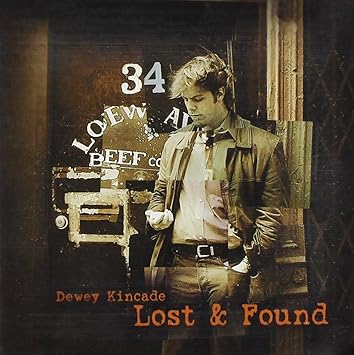
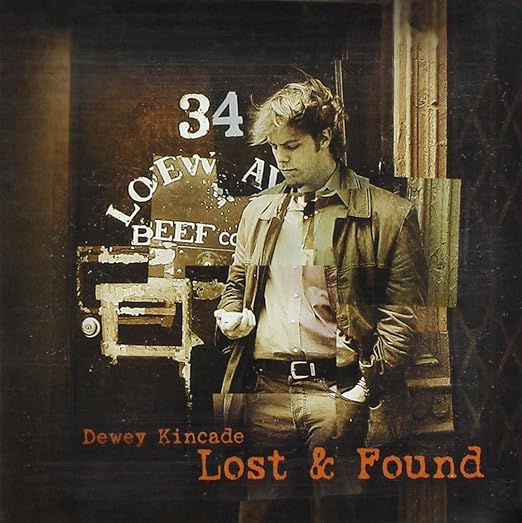
Lost and Found: The Album

Image result for dewey kincade lost and found

Twenty years ago I recorded Lost and Found. It was a strange time for me to say the least.  About a year earlier I had released my debut solo album Who are the Navigators? That album had drawn a lot of attention in Louisville. I managed to get regular airplay on WFPK, got reviewed in The Courier Journal, and managed to perform on several local TV stations. Things were looking bright. And then I got cancer. I was 26 years old. 

The year that followed was tumultuous.  I had so many highs and lows on a weekly basis that I found it very hard to to make up my mind about anything. The looming question over my debut album was whether it would be a solo project or a band project.  The question was never really answered. I had a crush on a woman who lived in New York, and we exchanged letters, but it never culminated in anything. People in the industry said that Who Are the Navigators? was all over the place, which it was.  It was as if one song-writer tried to write their own White Album.  I was told that I needed to focus on a particular sound, and I didn't know what that would be. All the while, I was debating whether I should move back to New York or stay in Louisville. I moved back for a while, but ended up returning home. 

I had two operations.  In between the two operations, I played South by Southwest for the first time. The second operation involved the removal of some lymph nodes, and it wasn't clear yet if the cancer had spread.  The recovery lasted weeks. I was hobbling around on a cane, and I took to calling myself "the gimp."  I began writing new songs, and I wanted to record another album. 

One day that Summer, I came home to Louisville from a week in Michigan.  I had been writing songs since my operation, and I was eager to get started.  Colin Brown and I recorded an album in a week.  It was really good, but the people with the money weren't ready to hand over the reins to us to produce an album. 

Bob Brockman was brought to Louisville to see what we could create.  We recorded some great tunes.  They had polish, but the process and the vibe wasn't there.  The tracks that Colin and I had recorded had vibe out the wazoo, but no polish. Somewhere between the two poles lied the truth.  The  money people wanted Bob, and thought it would make the most sense for me to go to New York. Colin did not want another producer in his studio.  After the year I had, I didn't really have the wherewithal for a pitched battle on the subject.  The money dried up, and the project seemed dead. 

That's when a distant relative (but close friend) Susan Hardy came to the rescue.  She was willing to invest in a new album.  Colin and I were very excited, but then the question became what would be on the album?  Bob had something along the lines of each song is a room in the same house, and they should reflect one another.  The problem was that I wrote folk songs, hard rock and pop at different times. Rather than plant my foot firmly in one field, I proposed that we record all three.  

Colin and I had been playing in a band with Dave Humphries called, The Money Shots.  We played hard jammy rock.  Dave is the type of musician who can play just about anything, so I enlisted him to play bass on all of the albums.  In about a week, Colin, Dave and I had recorded the basic tracks to about three albums.  Jimmy McDowell was on the other side of the glass.  It was Fall.

As is usually the case, the goal is always to put the "best" songs on the album.  At that point I had already written maybe two hundred songs.  I liked most of them. Much like Who are the Navigators? the album(s) began to take shape as another hodge-podge album.  "With the Wind" was written when I was 14, and "Can't Afford to Lose a Friend" was written when I was 26.  It hadn't yet occurred to me that I should group the songs based on the time period in which they were written. I kind of wonder what that album might have sounded like. 

Susan paid for musicians like Meredith Noel and Steve Cooley to come and play on the recordings. She also let me stay in her attic room in her house in the Highlands.  The main problem I had during this time is that I had too much time when I was not in the studio.  I could have recorded 16 hours a day 7 days a week, but that wasn't an option.  Colin needed down-time. I was restless and anxious.  I got a part-time job at Heine Brothers coffee, which didn't last, because I wanted to work in the afternoons, and they kept scheduling me in the mornings.   It's hard to open up a coffee shop at 6 in the morning after you've been in the studio until 2 am, so that didn't last long. 

Meanwhile, my crush had fizzled out.  I don't know what I was thinking. She was in New York, and I was in Louisville.  It was a relationship based on fantasy.  Still I felt very alone and isolated. I don't think I played out once the entire year I was working on Lost and Found. My bandmates from the first Navigators felt like I had abandoned them.  On an emotional level, I felt like I was running on fumes. 

By midwinter, the tracks were coming together.  We concluded that the only way to finish all the albums was to focus on them one at a time.  The acoustic album became the first album that we focused on.  The original goal was that the entire album would be exclusively acoustic instruments to separate it sonically from the other two.  But gradually some organ and electric guitar appeared, and it began to be clear that this was going to be the only album that would ever get finished. As a result some of the songs that were slated to be pop songs migrated to the acoustic album. 

When I began to play the mixes for people, I was told that it needed a bit more polish, so I asked Howie Gano to try mixing some of the songs.  Colin was not happy about that, and for a while all recording stopped. The process was in suspended animation for a while. 

In the mean-time I had started dating a woman I met who worked Actors Theatre. We moved in together in Indiana during the Summer. At this point I don't even recall why, but there was no money to put out the album.  I had been generously supported by Susan during this time, and we were waiting on some money to proceed.

Danny Flanigan was probably the only reason I played out at all that year, and he invited me and Butch Rice to the share the stage at Twice Told Coffeehouse.  Stephen Brown was there, and he took an interest in my material.  He offered to help put the album out, and he began to coordinate the design with Dennis Smiley.  Dennis used some pictures that Andrew Dailinger had taken on one of my brief sojourns to New York City.

My girlfriend had an offer to go to New York City, and I was conflicted about leaving Louisville again. The album wasn't done, I didn't have a band in New York. Maybe I could make some noise in Louisville as I had after my first album.  I definitely thought that this would be stronger.  In the end, I followed my heart, which turned out not to be a smart business move.  I released the album when I was in New York City with a pick-up band.  I had scheduled a release party so that I could sell copies of the album.  Ironically the entire shipment was momentarily lost in transit (and later found), but it meant a CD release party with no CD.

In hindsight, I think I could have made better choices during this whole process, but art ain't pretty. In the end, I continue to be happy about this album.  I am still proud of these recordings, and I hope you can get as much enjoyment out of it as I have over the years. 
Thursday, August 15, 2019

Bloom

Image result for dewey kincade lost and found

Bloom

This song was written in Brooklyn, New York.  I was working for a law-firm, and found myself unable to date.  I'm pretty shy by nature.  This was before online dating, which was better for me, because I didn't meet people who weren't at least curious about me. I went to parties, but I tended to stick to my friends like glue, and nobody ever introduced me to anyone.  At one point, I tried to date this gal that I knew from Louisville.  We went out on about five or six dates, and then she mentioned that she had a boy-friend. I sure don't miss those days. 

I wrote a lot back then, so I suppose it wasn't all bad.  I wrote some philosophy, poetry and a whole lot of songs.  I wasn't really thinking too much about the process.  I don't think I consciously chose to forego a rhyme scheme on the verses.  This song was very easy to write, but hard to play, so I didn't play it out much.  It took a couple of years before the awkwardness of the music felt natural, and that's when it was recorded. 

I sang lead, backing vocals, played guitar and organ
Colin Brown played drums
Dave Humphries played bass
Meredith Noel played viola
Steve Cooley played Mandolin
Mike Ross played the sizzling carrots. 

Wednesday, August 14, 2019

Lost and Found: Can't Afford to Lose a Friend

Image result for dewey kincade lost and found
I wrote this song while recovering from a bout with cancer. I had had two surgeries, and the second one was rather invasive involving the removal of lymph nodes.  The question was whether the cancer had spread.  I suppose their is never a good time to get cancer, but this entire episode came to light after I had released my first solo album Who are the Navigators? I had managed to get some local airplay, and phone calls from major labels.  I had positive reviews.  It was a heady time. Next thing I know I'm in the hospital.

As if that wasn't enough, I had developed a crush on a gal who lived in NYC (I was in Louisville at the time).  If cancer raises the stakes in your life, it does it doubly for your love-life (or lack of love-life, as the case was).

Several weeks after my second surgery I began writing a bunch of songs.  This was one of them.  "The River" was another.  One of these days, I'm going to put out THAT album in its entirety.  In the mean-time... This song seems to be an expression of the expectation that this crush thing wasn't going to happen, but maybe that's not the end of the world. I was right on both counts.

Fast forward a couple of months.  I am recording Lost and Found, and this song makes it to the top of the list.  Colin Brown played drums, Dave Humphries played bass, Dan Africk sang back up.  Steve Cooley did just about everything else except for the acoustic guitar, harmonica and lead vocals (me).

The funny thing about this recording is that we recorded it too fast.  It was a running debate.  It wasn't until we'd recorded everything that we decided we needed to slow it down.  We slowed the tape down to do this, and that resulted in my voice sounding deeper. Also, if you try to play along to the song it's not exactly in the key of C.

Ever since this song was recorded, I have been playing it. It never goes out of style for me.

Tuesday, August 13, 2019

Lost and Found: Take it for a Ride

Image result for dewey kincade

I wrote "Take it for a Ride" in Puerto Rico.  I was playing a wedding, and I was strumming my guitar on the beach.  If you listen closely, you can hear the ocean. It certainly was a reflection on the end of a long term relationship, but like so many of my songs, it may have started with an impulse rooted in my personal reality, it grew into its own reality.  That's why the song has stayed with me for so many years.

I recorded this (and the album) at CB Sounds with Colin Brown (who also played drums).  Dave Humphries played bass, and Dan Africk sang back up on the song.  I did the other stuff.